martes, 7 de octubre de 2014


Día 6 de octubre
Ayer, 6 de octubre, todavía estaba oscuro cuando caminábamos hacia el hangar de Newcastle, donde amablemente nos dejaron acomodar los autogiros durante la noche. Personal del rancho estaban ya calentando los motores de dos Cessnas. Quitamos las fundas, hicimos la preceptiva inspección y en cuanto salieron las avionetas carreteamos a la cabecera de pista para despegar con las primeras luces.

Yesterday, October 6, it was still dark when we walked to the hangar in Newcastle, where they let us accommodate the gyros during the night. Ranch staff were already heating the engines of two Cessnas. We removed the covers, made the mandatory inspection and as soon as the planes left we went to the head of the runway to take off with the first lights.

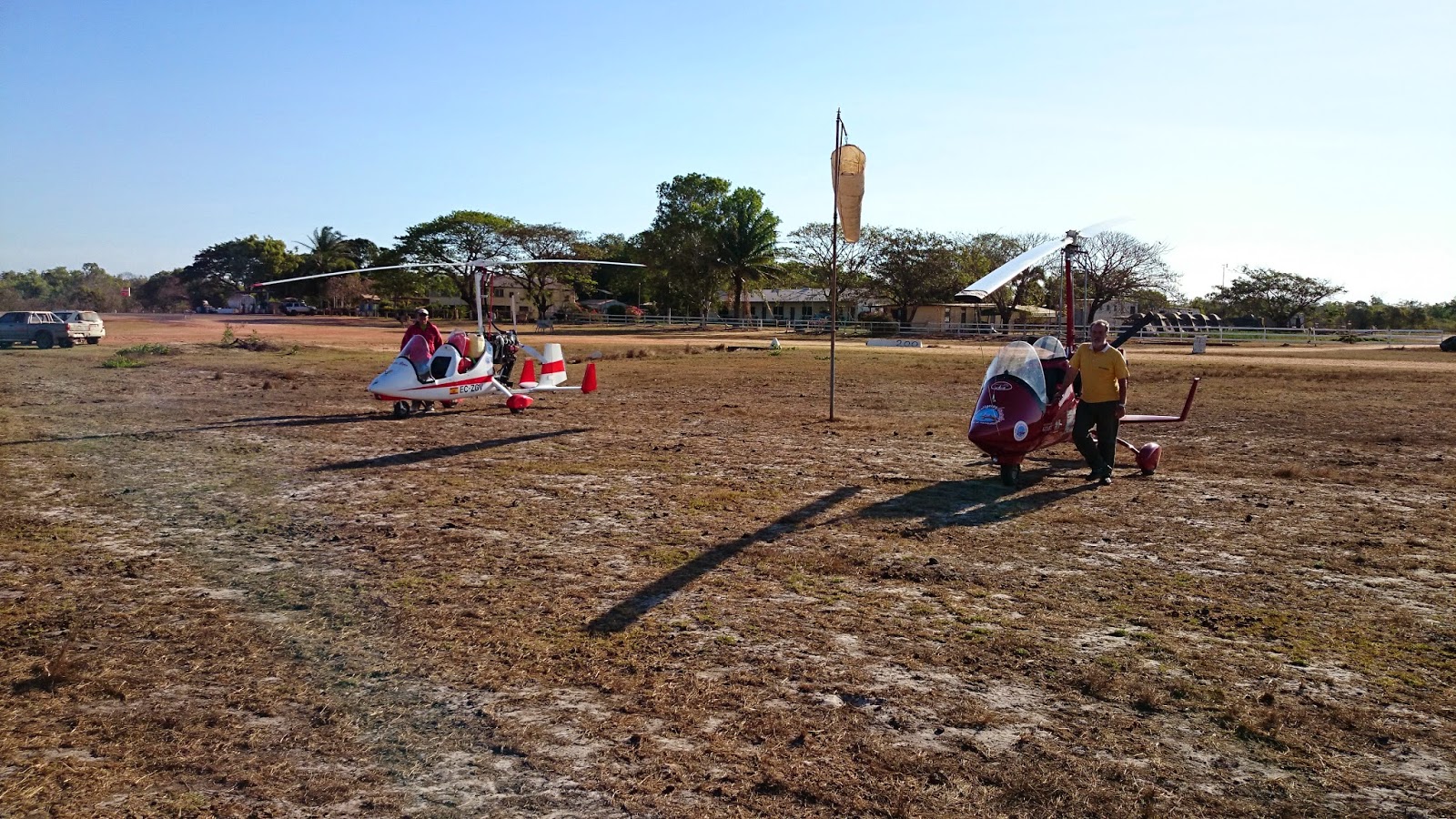
Aeródromo de Wave Hill
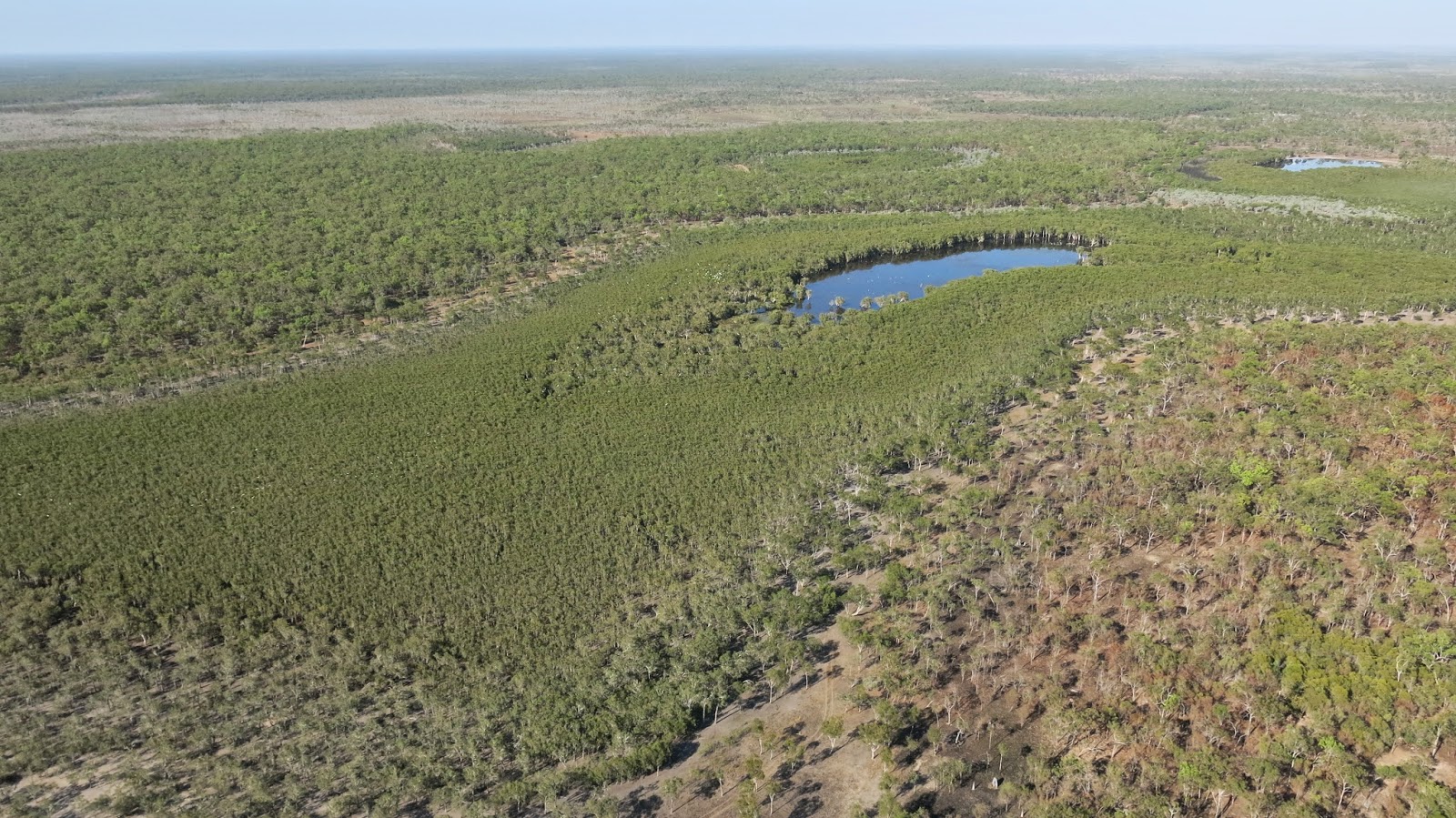
En la primera etapa, que nos llevaría a Wave Hill para el primer repostaje, durante 249km atravesamos una planicie cubierta de escasa vegetación: árboles de escasa talla, arbustos, matorrales y termiteros.
 En Wave Hill, otro aeródromo de una granja, paramos lo imprescindible para rellenar los depósitos.

In the first stage, which would take us to Wave Hill for the first refueling, we crossed a plain covered with scarce vegetation for 249km: small trees, shrubs, bushes and termite mounds.
In Wave Hill, another airfield of a farm, we stop the essentials to fill the tanks.

Entre Wave Hill y Nelson Springs (Between Wave Hill and Nelson Springs)
La segunda etapa, 203km entre Wave Hill y Nelson Springs, fue más entretenida. El paisaje se hizo más montañoso, variado y colorista. Ya empezaba el calor y volamos bastante altos. Después de casi dos horas de vuelo aterrizamos en Nelson Springs (ni un alma como casi siempre).

The second stage, 203km between Wave Hill and Nelson Springs, was more entertaining. The landscape became more mountainous, varied and colorful. The heat was already beginning and we flew quite high. After almost two hours of flight we landed in Nelson Springs (nobody as usual).

Entre Wave Hill y Nelson Springs (Between Wave Hill and Nelson Springs)
Aeródromo de Nelson Springs
En Nelson Spring hicimos el segundo auto repostaje. El calor era insoportable, eran alrededor de las 11:00 y todavía tardaríamos más de una hora en completar la tercera etapa de la jornada

At Nelson Spring we did the second auto refueling. The heat was unbearable, it was around 11:00 and it would still take more than an hour to complete the third stage of the day

Aeródromo de Nelson Springs
La tercera y última etapa de 124km nos llevaría a Turkey Creek ("El riachuelo del pavo"?) en una hora y diez minutos. Estamos ya en el territorio de Australia occidental; ahora son 6 las horas de adelanto respecto a España

The third and final 124km stage would take us to Turkey Creek in an hour and ten minutes. We are already in the territory of Western Australia; now there are 6 hours ahead of Spain

Camino de Turkey Creek (On the way to Turkey Creek)

Camino de Turkey Creek (On the way to Turkey Creek)

Aeródromo de Turkey Creek
Roadhouse de Turkey Creek


Nuestros aposentos en la Roadhouse (Our rooms in the Roadhouse)
Del aeródromo a la Roadhouse hay aproximadamente 2km. Enfundamos los autogiros e iniciamos la torturante caminata. Apenas recorridos 500m un vecino de Warmun (así se llama este poblado de Turkey Creek donde la mayoría de sus habitantes son aborígenes) nos acerca en su coche.
Tomamos alojamiento en la Roadhouse; son habitaciones individuales pequeñas y muy modestas con los aseos comunitarios fuera, pero están equipadas con aire acondicionado, un frigorífico y televisor (¿"!"?)

From the airfield to the Roadhouse there are approximately 2km. We cover the gyros and begin the torturing walk under the hot sun. Just 500m away a neighbor of Warmun (this is the name of this town of Turkey Creek where most of its inhabitants are aboriginal) takes us in his car.
We take lodging at the Roadhouse; They are small and very modest single rooms with communal toilets outside, but are equipped with air conditioning, a refrigerator and TV

Poblado de Warmun en Turkey Creek (Warmun Village in Turkey Creek)
En el hangar-cobertizo del aeródromo (In the hangar-shed of the airfield)
Hoy, día 7 de octubre, hacemos descanso para planificar las próximas rutas. Ha llegado la furgo, que ha empleado 2 jornadas en llegar. Mientras los autogiros cubrieron una distancia de 557km hasta llegar aquí, la furgo tuvo que hacer alrededor de 1.100km

Today, October 7, we take a break to plan the next routes. The van has arrived, which has taken 2 days to arrive. While the gyros covered a distance of 557km to get here, the van had to do about 1,100km


domingo, 5 de octubre de 2014

Hoy puede decirse que ha sido una jornada bastante tediosa.
La primera etapa de 229km la realizamos sin mucho movimiento, salimos temprano y a esas horas el aire todavía está estable y fresco.

Today it can be said that it has been a very tedious day.
We made the first stage of 229km without much movement, we left early because at that time the air is still stable and fresh.

Nada más despegar de Bankly (Just take off from Bankly)


Teníamos previsto hacer el auto repostaje en un campo llamado "Banka Banka", pero tuvimos que desistir porque el campo parecía que llevaba abandonado mucho tiempo. A la pista le habían crecido árboles, arbustos y termiteros. A pocos kilómetros de allí estaba el aeródromo de una compañía minera, "Bootu Creek", así que allí nos dirijimos para el repostaje. Cuando estábamos acabando de rellenar los depósitos, viene hacia nosotros a toda velocidad un todoterreno con luces y sirenas. Pensamos de inmediato que íbamos a tener problemas por haber aterrizado allí. Muy nerviosos le intentamos explicar al hombre, con una llave de tuercas en la mano para parecer más convincentes, que habíamos tenido un pequeño problema mecánico y que ya solucionado nos íbamos de allí enseguida. Al hombre no le interesa nada de lo que le decimos y nos obliga a subir al coche, porque en breve va a tener lugar una explosión controlada en una zona de la mina cerca de donde estamos. Nos dice que una vez realizada la explosión nos volverá a acercar a los autogiros y podremos irnos. Así que tranquilos nos subimos en el coche y nos lleva a presenciar la explosión en primera fila. La explosión ensordecedora levanta una nube de polvo rojo de considerable altura. Esperamos a que la nube se disipe y nos regresa hasta los autogiros. Por el camino se interesa por nuestros autogiros. Nos despedimos del hombre y despegamos rápidamente.

We planned to do the refueling at an airfield called "Banka Banka", but we had to give up because it seemed like it had been abandoned for a long time. Trees, shrubs and termite mounds had grown on the runway. A few miles from there was the airfield of a mining company, "Bootu Creek," so we headed there for refueling. When we were finishing filling the tanks, an SUV with lights and sirens is coming at full speed. We immediately thought that we were going to have problems having landed there. Very nervous we tried to explain to the man, with a wrench in our hand to seem more convincing, that we had had a small mechanical problem and that already solved we were leaving there immediately. The man is not interested in anything we say and forces us to get into the car, because a controlled explosion will soon take place in an area of ​​the mine near where we are. He tells us that once the explosion is done, he will bring us back to the gyros and we can leave. So calm we get in the car and it leads us to witness the explosion in the front line. The deafening explosion raises a cloud of red dust of considerable height. We wait for the cloud to dissipate and return us to the gyros. On the way he is interested in our gyros. We say goodbye to the man and take off quickly


Aeródromo de Bootu Creek (Bootu Creek Airfield)
Paisaje típico de la jornada (Typical landscape of the day)

Aeródromo de Newcastle (Newcastle airfield)

Newcastle Waters Station

La segunda parte de la jornada de 173km terminó en "Newcastle Waters Station".
 Pensábamos, porque así aparecía anunciada, que se trataba de la típica Roadhouse, pero resultó ser un rancho de ganado privado. La dueña nos dio el teléfono de un alojamiento próximo. Estando todo ocupado, le pedimos nos dejara acampar en sus instalaciones. Lo que hizo fue acomodarnos en unas habitaciones en los bajos de una de las casas de la granja (no nos cobra nada).

The second part of the 173km journey ended at "Newcastle Waters Station".
We thought, because it was announced, that it was the typical Roadhouse, but it turned out to be a private cattle ranch. The owner gave us the phone number of a nearby accommodation. As all the accommodations were occupied, we asked the ranch owner to allow us to camp on her land. What she did was accommodate us in some rooms on the ground floor of one of the farm houses (she doesn't charge us anything).

Nuestro alojamiento en la granja (Our farm accommodation)

Los hangares de la explotación (The ranch hangars)

El clásico "road train". Éste es de la granja. La señora nos dijo que la granja tenía alrededor de 70.000 reses
(The classic "road train". This one is from the farm. The lady told us that the farm had about 70,000 cattle)


sábado, 4 de octubre de 2014

Rutas de los días 2, 3 y 4 de octubre 2014 (Routes on October 2, 3 and 4, 2014)
Paisaje dominante entre Donnington Airpark y Mount Garnnett
En estas tres últimas jornadas nos separamos de la furgoneta de apoyo y quedamos de reunirnos en Barkly al final de la tercera jornada. Hemos estado sin internet y en algunas ocasiones sin cobertura telefónica, por lo que ahora, que ya estamos reunidos y disponemos de tecnología, podemos hacer un pequeño resumen de estos tres días.

In these last three days we separated from the support van and we met in Barkly at the end of the third day. We have not had internet and sometimes without telephone coverage, so now, that we are already together and have technology, we can make a brief summary of these three days.

Salimos temprano el día 2 de octubre de Donnington Airpark para cubrir tres etapas. La primera nos llevó cruzando montañas a Mount Garnett donde hicimos el primer auto repostaje.

We left early on October 2 at Donnington Airpark to cover three stages. The first took us across mountains to Mount Garnett where we did the first refueling.


Aeródromo de Mount Garnett

Aeródromo de Mount Garnett


Gasolinera del poblado de Laura
En la segunda etapa nos posamos en Laura sobrevolando planicies de bosque de eucaliptus, tierras de cultivo y praderas salpicadas de charcas con mucho ganado. En Laura tuvimos que procurarnos gasolina para la tercera etapa. La gasolinera estaba como a un kilómetro del campo. Con un sol rabioso fuimos andando con dos bidones a llenarlos a la gasolinera. La vuelta con ellos cargados y el sol aplastándonos se hacía muy insoportable. Unos lugareños que vieron nuestro padecer se ofrecieron a llevarnos en coche de regreso al aeródromo (la gente es muy amable, todo el mundo nos ayuda).

In the second stage we landed in Laura flying over eucalyptus forest plains, farmland and meadows dotted with ponds with lots of cattle. In Laura we had to get gas for the third stage. The gas station was about a kilometer from the airfield. Under a raging sun we walked with two drums to fill them at the gas station. The return with them loaded and the sun crushing us became very unbearable. Aboriginal people who saw our suffering offered to drive us back to the airfield (people are very friendly, everyone helps us)
Así, todo el camino entre Laura y Musgrave (So, all the way between Laura and Musgrave)
La tercera etapa, más corta, por encima de un interminable bosque de eucaliptos con el suelo repleto de termiteros y charcas diseminadas, nos llevó a Musgrave.
Es este lugar uno de los típicos en Australia que disponen de gasolinera, motel, restaurante, tienda, aeródromo,... Paran en estos lugares, turistas que están recorriendo el país, transportistas, trabajadores destinados por esas zonas, aviones privados y algunos autogiros muy de tarde en tarde.

The third stage, shorter, above an endless eucalyptus forest with the ground full of termites and scattered ponds, took us to Musgrave.
Is this place one of the typical ones in Australia that have a gas station, motel, restaurant, shop, airfield, ... They stop in these places, tourists who are touring the country, carriers, workers destined for those areas, private planes and some gyros occasionally

Termiteros
Musgrave Roadhouse

Musgrave Roadhouse

Aeródromo de Musgrave


Entre Musgrave y Pormpuraaw  (Between Musgrave and Pormpuraaw)


Ayer, viernes 3 de octubre, salimos muy temprano (por estas latitudes hace mucho calor y conviene aprovechar las primeras horas del día para volar, porque el sol es implacable) con dirección al golfo de Carpentaria para aterrizar en la costa en Pormpuraaw. Es un aeródromo de asfalto con, en teoría, todos los servicios aeroportuarios, pero no había nadie (como nos ocurre en casi todos los campos donde aterrizamos).

Yesterday, Friday, October 3, we left very early (by these latitudes it is very hot and should take advantage of the first hours of the day to fly) towards the Gulf of Carpentaria to land on the coast in Pormpuraaw. It is an asphalt airfield with, in theory, all airport services, but there was no one (as happens in almost all the airfields where we landed).

Entre Musgrave y Pormpuraaw (Between Musgrave and Pormpuraaw)
El paisaje hasta Pormpuraaw, más de lo mismo: bosque de eucaliptus, termiteros, charcas con aves, granjas de vacas,...

The landscape to Pormpuraaw, more of the same: eucalyptus forest, termites, bird ponds, cow farms, ...

Aeródromo de Pormpuraaw

Aeródromo de Pormpuraaw
 Hicimos el auto repostaje, avisamos por teléfono a Karumba (se pronuncia "caramba") para anunciar que llegaríamos en unas tres horas, nos dijeron "ok", y sin poder despedirnos de nadie despegamos para llegar costeando a Karumba, otro aeropuerto donde tampoco había nadie.

We did the auto refueling, we notified Karumba by phone to announce that we would arrive in about three hours, they told us "ok", and without being able to say goodbye to anyone we took off to follow the coastline to land at Karumba, another airport where there was no one either.

Entre Pormpuraaw y Karumba (Between Pormpuraaw and Karumba)

Entre Pormpuraaw y Karumba (Between Pormpuraaw and Karumba)

Entre Pormpuraaw y Karumba

Entre Pormpuraaw y Karumba

Aeropuerto de Karumba (Karumba airport)

Aeropuerto de Karumba
Encontramos alojamiento a unos 15 minutos andando desde el aeropuerto y la dueña del motel nos ayudó con su furgoneta, en dos viajes, a acarrear la gasolina desde la gasolinera hasta el aeropuerto.
La costa entre Pormpuraaw y Karumba está tapizada de manglares, estrechas playas y multitud de estuarios de grandes y pequeños ríos. A nuestro paso se van levantando del mangle multitud de aves, garzas, cacatúas, pelícanos,...
En 309km de costa que recorrimos no vimos un alma.

We found accommodation about 15 minutes walk from the airport and the owner of the motel helped us with her van, on two trips, to take the gas from the gas station to the airport.
The coast between Pormpuraaw and Karumba is covered with mangroves, narrow beaches and many estuaries of large and small rivers. As we pass, a multitude of birds, herons, cockatoos, pelicans are rising from the mangrove ...
In 309km of coastline we saw no signs of civilization

"Chafacanguros" en Karumba. ("Crush kangaroos" in Karumba.)

Hoy, día 4 de octubre, salimos de Karumba con la salida del sol (las dos etapas son de interior, el sol calentará rápidamente el suelo y las térmicas de aire nos harán muy movido el vuelo).
La primera etapa hasta Adels Grove atraviesa primero marismas y terrenos pantanosos para convertirse luego en extensas planicies de pasto.

Today, October 4, we leave Karumba with the sunrise (the two stages are inland away from the coast, the sun will quickly heat the ground and the air thermal will make the flight very moved).
The first stage until Adels Grove first crosses marshes and swampy lands to later become extensive plains of grass.


Aeródromo de Adels Grove

Aeródromo de Adels Grove
La segunda etapa (306km) nos llevaría a Barkly donde nos reunimos con la furgoneta. Esta etapa ha sido hasta ahora la más pesada de todas. Un calor tremendo hacía subir la temperatura de los motores. Subimos todo lo alto que pudimos para refrigerarnos. Las térmicas convirtieron la etapa en una montaña rusa. El paisaje monótono, planicies interminables de pastos y muchas vacas de vez en cuando agrupadas en torno a los abrevaderos y charcas diseminadas.

The second stage (306km) would take us to Barkly where we met with the van. This stage has so far been the heaviest of all. A tremendous heat raised the temperature of the engines. We climbed as high as we could to cool off. The air thermal turned the stage into a roller coaster. The landscape was monotonous, endless plains of pastures and many cows occasionally clustered around the watering holes and scattered ponds.
Nada más despegar de Adels Grove (Just take off from Adels Grove)


Llegando a Barkly (Arriving at Barkly)